







5starsstocks.com: The Complete Guide to Finding Your Next Stock Pick (2026 Edition)

Finding reliable stock ideas across dozens of sectors — from defense to dividends, AI to cannabis can be overwhelming for both new and experienced investors. Markets move fast, sectors rotate in and out of favor, and no single investor has time to track every industry closely. That’s where 5starsstocks.com comes in, offering curated stock insights across a wide range of categories to help investors identify opportunities that match their strategy, whether they’re focused on growth, income, or long-term value.
This guide walks through what 5starsstocks.com covers, breaks down each major stock category available on the platform, and explains how to use these resources to build a well-rounded, diversified portfolio in 2026.
What Is 5starsstocks.com?
5starsstocks.com is a stock research resource designed to help investors quickly scan opportunities across multiple sectors without having to piece together research from a dozen different sources. Rather than focusing on a single niche, the site organizes stock ideas by theme — defense, income, materials, technology, healthcare, and more — making it easier to explore specific industries or investing styles depending on what an investor is looking for at any given time.
For someone new to investing, this kind of categorized approach can be especially useful. Instead of starting from a blank page and wondering where to even begin, a new investor can browse by theme — say, passive income or blue chip stability — and start narrowing down candidates that match their goals and risk tolerance.
Passive and Income Stocks
For investors focused on building long-term cash flow, the 5starsstocks.com passive stocks and 5starsstocks.com income stocks categories highlight companies known for consistent dividend payments and steady cash generation. These typically include established, cash-rich businesses that prioritize returning capital to shareholders — a core building block for anyone assembling a passive income portfolio.

Income-focused investing tends to appeal most to:
- Retirees or near-retirees looking to supplement fixed income
- Investors who want cash flow without needing to sell shares
- Anyone building a long-term reinvestment strategy through dividend compounding
When evaluating income stock picks, it’s worth looking beyond the advertised yield alone. A company offering a high yield with an unstable earnings history is a very different investment than one offering a modest yield backed by decades of consistent payouts. Cross-referencing any income stock idea with its payout ratio, free cash flow trends, and historical dividend growth can help separate durable income plays from riskier ones.
Defense and Military Stocks
Geopolitical developments have kept defense spending in focus over the past several years, and the 5starsstocks.com defense and 5starsstocks.com military categories track companies involved in aerospace, defense contracting, and related government-funded industries.
Defense stocks tend to offer a different risk profile than most consumer-facing sectors:
- Revenue is often tied to multi-year government contracts, which can smooth out earnings volatility
- Demand is less sensitive to consumer spending cycles or discretionary income
- Order backlogs can provide visibility into future revenue that’s harder to find in other sectors
That said, defense and military stocks aren’t without risk. Government budget cycles, shifting political priorities, and program cancellations can all affect individual companies, even within a sector that’s broadly seen as stable. Reviewing a company’s contract backlog and recent filings on the SEC’s EDGAR database can offer useful context before investing. Investors interested in this space often benefit from spreading exposure across several contractors rather than concentrating in a single name.
AI and Technology-Driven Stocks
Artificial intelligence continues to reshape multiple industries, and the 5starsstocks.com ai section highlights companies positioned to benefit from this shift — from infrastructure providers and semiconductor makers to software companies integrating AI into their existing products.
AI-related stocks generally fall into a few broad buckets:
- Infrastructure providers — companies building the chips, data centers, and cloud capacity that power AI models
- Platform and software companies — businesses embedding AI features into existing products to drive new revenue or retention
- Application-layer companies — newer entrants building products specifically around AI capabilities
For investors chasing exposure to one of the decade’s biggest technology trends, this category offers a starting point for further research. Because AI-related valuations can run ahead of near-term earnings, it’s especially important to balance excitement about the theme with a clear-eyed look at each company’s actual financials and competitive position.
Blue Chip and Value Stocks
For a more conservative approach, 5starsstocks.com blue chip picks focus on large, well-established companies — often defined as blue chip stocks — with long track records of stability, strong brand recognition, and durable competitive advantages. Paired with 5starsstocks.com value stocks, which highlight companies trading below their intrinsic worth relative to earnings or book value, these categories appeal to investors who prioritize downside protection and steady, long-term compounding over speculative growth.
Blue chip and value investing often go hand in hand because:
- Many blue chip companies occasionally trade at a discount during broader market pullbacks, creating value opportunities
- Both approaches tend to emphasize fundamentals — earnings quality, balance sheet strength, and cash flow — over momentum or hype
- Investors in this category are typically playing a longer time horizon, which can smooth out short-term volatility
This combination tends to work well as the “core” of a portfolio, around which more speculative or thematic positions (like AI or cannabis stocks) can be layered in smaller amounts.
Materials, Lithium, and Nickel Stocks
The push toward electrification and renewable energy has put raw materials squarely in the spotlight. 5starsstocks.com materials, along with dedicated 5starsstocks.com lithium and 5starsstocks.com nickel picks, cover companies involved in mining and processing the metals that power batteries, electric vehicles, and grid-scale energy storage.
These are industries where supply and demand dynamics can shift quickly:
- Lithium and nickel prices have historically been volatile, tied closely to EV demand forecasts and new mine supply coming online
- Materials companies can be capital-intensive, meaning balance sheet strength and cost position matter significantly
- Long-term demand projections for battery metals remain strong given the ongoing energy transition, even as short-term price cycles fluctuate
Investors drawn to this category should be comfortable with more cyclicality than they’d find in, say, blue chip or income stocks — commodity-linked businesses tend to move with global demand cycles rather than steady, predictable growth curves.
Healthcare and Cannabis Stocks
Healthcare remains one of the most defensive sectors in the market, and 5starsstocks.com healthcare picks focus on companies with durable demand regardless of broader economic conditions — think pharmaceuticals, medical devices, and healthcare services companies that people rely on in good times and bad.
Meanwhile, 5starsstocks.com cannabis covers a more speculative, fast-evolving industry, appealing to investors interested in a sector still working through regulatory uncertainty and market maturation. Cannabis stocks can offer significant upside if regulatory tailwinds continue to develop, but they also carry meaningfully higher risk:
- Regulatory status varies significantly by jurisdiction and can change quickly
- Many companies in the space are still working toward consistent profitability
- Access to traditional banking and capital markets has historically been more limited for cannabis companies than for other industries
Because of this risk profile, cannabis stock exposure is often best sized as a smaller, more speculative allocation rather than a core portfolio holding.
Penny Stocks and 3D Printing
For investors with a higher risk tolerance, 5starsstocks.com penny stock picks highlight lower-priced, higher-volatility opportunities that carry the potential for outsized gains alongside outsized risk. Penny stocks can be appealing for their low entry price and potential for rapid moves, but they also tend to come with:
- Lower trading liquidity, which can make it harder to enter or exit positions at a favorable price
- Less analyst coverage and public information, increasing the importance of independent due diligence
- Higher volatility overall, meaning position sizing matters more than it does with larger, more established names
Separately, 5starsstocks.com 3d printing stocks track companies in the additive manufacturing space — an industry that continues to expand beyond prototyping into full-scale production across aerospace, medical, and industrial applications. As 3D printing technology matures, companies in this space are increasingly competing on production speed, material science, and manufacturing partnerships rather than novelty alone.
Dividend Safety Score: A Key Filter Across Categories
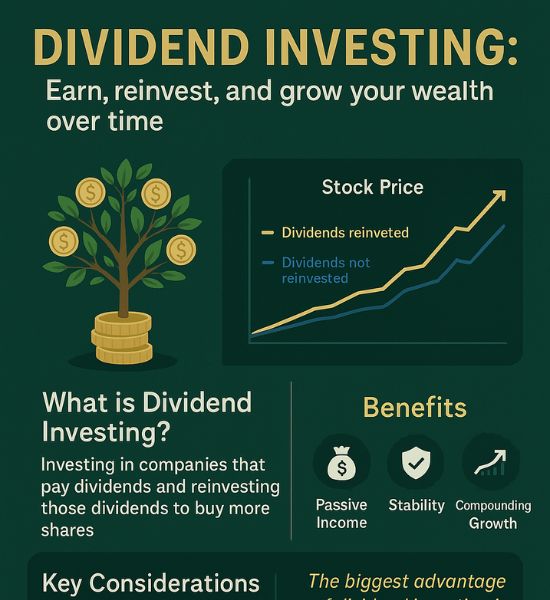
Regardless of which category an investor is browsing — income stocks, blue chip names, or even dividend-paying picks within materials or healthcare — the dividend safety score is one of the most useful filters available. A dividend safety score evaluates:
- Payout ratio relative to earnings and free cash flow
- Debt levels compared to industry peers
- Historical consistency of dividend payments, including performance through past downturns
- Overall earnings stability
A high yield paired with a weak safety score is often a warning sign of an unsustainable dividend rather than an opportunity — it can indicate a payout that’s at risk of being cut. Prioritizing safety alongside yield tends to produce more durable passive income over the long run.
Ready to Buy Now: Timing Considerations
Categories like 5starsstocks.com buy now and 5starsstocks.com to buy naturally draw attention from investors looking for timely ideas rather than long-term watchlist candidates. While no resource can perfectly time the market, “ready to buy” style picks are typically flagged based on factors like:
- Recent pullbacks that bring valuations closer to historical averages
- Positive earnings momentum or improving fundamentals
- Sector-wide tailwinds that could benefit a specific company more than peers
Even so, it’s worth treating “buy now” signals as a starting point for further research rather than a standalone reason to purchase. Confirming the underlying fundamentals — and making sure a position fits your broader portfolio strategy — remains essential before acting on any timely stock idea.
How to Use 5starsstocks.com Effectively
With so many categories available, it helps to approach the site with a clear strategy rather than browsing every list without a plan:
- Define your goal first — income, growth, speculative upside, or a blend of these — before browsing categories.
- Cross-reference picks with your own research, including financial statements, analyst coverage, and recent news, rather than relying on any single source.
- Diversify across categories rather than concentrating in one speculative theme, such as cannabis or penny stocks alone.
- Size positions according to risk — core holdings like blue chip and income stocks can typically support larger allocations, while cannabis, penny stocks, and other higher-volatility categories are often better suited to smaller position sizes.
- Revisit sector pages regularly, since stock rankings and standout names can shift as market conditions, interest rates, and sector sentiment change.
Building a Sample Portfolio Framework
While every investor’s needs differ, a diversified framework drawing from these categories might look something like:
- Core (40-50%): Blue chip stocks and established income/dividend payers, chosen for stability and consistent cash flow
- Growth (20-30%): AI and technology-driven names, along with select healthcare growth stories
- Cyclical/Materials (10-15%): Lithium, nickel, and broader materials exposure tied to the energy transition
- Defense/Government-linked (10-15%): Defense and military contractors for exposure less correlated with consumer spending
- Speculative (5-10%): Cannabis, penny stocks, and other higher-risk, higher-reward ideas
This is only a starting framework, not a one-size-fits-all allocation — risk tolerance, time horizon, and income needs should all shape how these percentages are adjusted for any individual investor.
Final Thoughts
Whether you’re looking for 5starsstocks.com to buy ideas in a specific sector or simply want a broad view of where opportunities exist across the market, the platform’s sector-by-sector breakdown makes it easier to narrow down where to focus your research. From income stocks and blue chip stability to higher-risk categories like cannabis and penny stocks, having ideas organized by theme can save significant research time.
As with any stock resource, it’s best used as a starting point for due diligence rather than a substitute for it. Pairing these categorized ideas with your own analysis — checking dividend safety scores, reading recent earnings reports on Nasdaq, and understanding each sector’s specific risks — is the key to building a portfolio that genuinely fits your goals, rather than simply chasing whatever category looks most exciting at the moment.
This article is for informational purposes only and does not constitute financial advice. Always conduct your own research or consult a licensed financial advisor before making investment decisions.