
FintechZoom.com: Complete Guide to Markets, Crypto, Banking and Finance

Financial information moves quickly. Stock prices can change within seconds, while cryptocurrency markets operate around the clock. At the same time, central-bank decisions, economic reports, and fintech developments can influence markets worldwide.
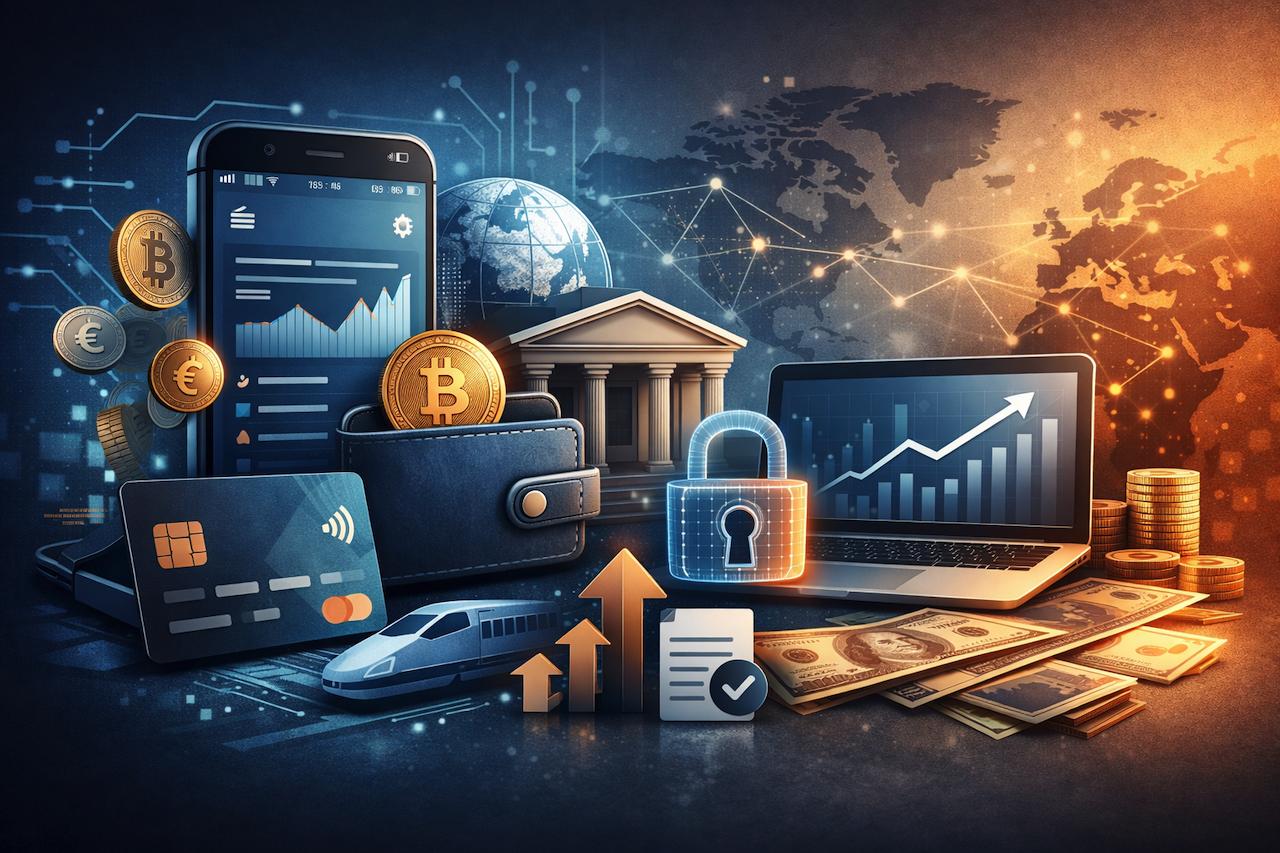
FintechZoom.com brings many of these topics together in one financial information platform. Its coverage includes markets, stocks, cryptocurrency, banking, payments, investing, business, economics, and financial technology.
For beginners, the platform can make complicated financial topics easier to understand. Meanwhile, experienced readers can use financial news and analysis as part of a broader research process.
This guide explains what FintechZoom.com is, what it covers, how readers can use it, and what to consider when evaluating financial information.
Table of Contents
- What Is FintechZoom.com?
- What Does FintechZoom.com Cover?
- FintechZoom.com Markets
- Stock Market and Global Indices
- Cryptocurrency and Bitcoin
- Banking and Digital Payments
- Personal Finance and Loans
- Financial Technology and Fintech
- Artificial Intelligence in Finance
- Business and Economic Coverage
- How to Use FintechZoom.com
- FintechZoom.com for Beginners
- FintechZoom.com for Experienced Readers
- Benefits and Limitations
- FintechZoom.com vs. Traditional Financial Platforms
- FintechZoom.com and Similar Domains
- How to Evaluate Financial Information
- Major Fintech Trends
- Common Mistakes
- Frequently Asked Questions
- Conclusion
What Is FintechZoom.com?
FintechZoom.com is a financial information and media website covering the intersection of finance and technology. Its content includes financial markets, cryptocurrency, banking, payments, investments, business, economics, and fintech.
The platform covers both traditional and emerging areas of finance. As a result, readers can explore market developments alongside technological changes affecting financial services.
For instance, an interest-rate decision can affect stocks, bonds, currencies, mortgages, and cryptocurrency. Similarly, artificial intelligence can influence banking, fraud detection, investment research, and customer service.
Therefore, understanding these connections can give readers a broader view of financial markets.
Is FintechZoom.com a Trading Platform?
FintechZoom.com should primarily be viewed as a financial information resource.
It can help readers research financial topics, follow market developments, and understand industry trends. However, reading an article is different from executing a financial transaction.
Investors should use appropriate regulated financial-service providers when buying or selling financial assets. Furthermore, important investment decisions should not rely on a single article or headline.
What Does FintechZoom.com Cover?
FintechZoom.com covers several major areas of modern finance.
These include:
- Stock markets
- Global financial markets
- Cryptocurrency
- Bitcoin
- Blockchain
- Banking
- Digital payments
- Personal finance
- Loans
- Investments
- Business
- Economics
- Artificial intelligence
- Financial technology
Because these topics overlap, readers can often understand a financial story from several different perspectives.
For example, rising inflation may influence central-bank policy. Consequently, interest rates can affect borrowing costs, bond yields, stock valuations, and currency markets.
This broader context is especially useful when researching major financial events.
FintechZoom.com Markets
Market coverage is an important part of financial research. Investors often want to know not only what prices are doing but also why they are moving.
FintechZoom’s market coverage includes stocks, indices, bonds, commodities, and other financial topics.
A useful market analysis should consider several factors:
- Current market direction
- Economic conditions
- Company announcements
- Earnings reports
- Interest-rate expectations
- Investor sentiment
- Regulatory developments
- Global events
For example, a company may experience a sharp decline after releasing disappointing earnings. However, the same decline may mean something different if the entire sector is falling.
Therefore, comparing individual assets with broader market conditions can provide better context.
Stock Market and Global Indices
Stock-market indices provide a quick way to measure broader market performance.
Some widely followed indices include:
- S&P 500
- Nasdaq Composite
- Dow Jones Industrial Average
- Russell 2000
- FTSE 100
- DAX
- CAC 40
- Nikkei 225
- Hang Seng
An index represents a group of securities. Therefore, it can provide a broader market perspective than looking at one company.
Why Market Context Matters
Imagine that a technology stock drops 4% during one trading session.
If the Nasdaq also declines sharply, the company’s movement could be connected to broader technology-sector weakness. On the other hand, if the Nasdaq rises while that particular stock falls, company-specific news may be more important.
As a result, investors should consider both individual securities and wider market conditions.

7
Cryptocurrency and Bitcoin
Cryptocurrency has become an important part of modern financial markets. FintechZoom.com covers cryptocurrency, Bitcoin, blockchain, and digital-asset developments.
Unlike traditional stock markets, cryptocurrency markets generally operate 24 hours a day. Therefore, significant price movements can occur during weekends, holidays, or overnight hours.
Cryptocurrency Volatility
Crypto assets can experience substantial price changes in relatively short periods.
However, price movement alone does not explain what is happening.
Several factors can influence cryptocurrency markets, including:
- Regulatory announcements
- Institutional activity
- Macroeconomic conditions
- Market sentiment
- Network developments
- Liquidity
- Investor positioning
Consequently, readers should look beyond the headline price when researching cryptocurrency.
Blockchain Technology
Blockchain extends beyond cryptocurrency.
The technology can support applications involving:
- Digital identity
- Payment systems
- Smart contracts
- Asset tokenization
- Settlement systems
- Digital ownership
- Supply-chain records
As blockchain technology develops, its relationship with traditional financial infrastructure may become increasingly important.
Banking and Digital Payments
Technology has transformed the way people interact with banks.
Today, customers can often:
- Open accounts online.
- Transfer money through mobile apps.
- Make contactless payments.
- Manage accounts remotely.
- Apply for financial products digitally.
- Use mobile wallets.
- Receive instant transaction alerts.
Meanwhile, banks are investing in automation, cybersecurity, artificial intelligence, and digital infrastructure.
Digital Banking
Digital banking allows customers to access many financial services without visiting a physical branch.
This approach can make banking more convenient. At the same time, it creates new challenges involving cybersecurity, authentication, privacy, and fraud prevention.
Digital Payments
Digital payments have also changed modern commerce.
Businesses increasingly rely on:
- Card payments
- Mobile wallets
- Bank transfers
- Payment gateways
- Instant payments
- Cross-border payment systems
- Embedded payment services
As digital payments grow, secure authentication becomes increasingly important.

6
Personal Finance and Loans
Financial information is not limited to investors. Personal finance also affects everyday decisions.
Topics such as budgeting, credit, saving, loans, and mortgages can have a direct impact on household finances.
Fintech platforms have also changed how consumers apply for and manage loans.
For example, online lending platforms may allow applicants to submit documents digitally. In some cases, automated systems can also assist with eligibility checks and underwriting.
What to Check Before Taking a Loan
Before accepting a loan, look beyond the advertised monthly payment.
Instead, compare:
- Interest rate
- APR where applicable
- Total repayment amount
- Loan duration
- Origination fees
- Late-payment fees
- Early repayment terms
- Fixed or variable rates
- Eligibility requirements
A lower monthly payment does not necessarily mean a cheaper loan. In fact, extending the repayment period can increase the total amount paid.
Therefore, always consider the complete cost.
Financial Technology and Fintech
Fintech refers broadly to technology used to deliver or improve financial services.
The industry includes:
- Mobile banking
- Digital payments
- Online lending
- Robo-advisory
- Fraud detection
- Blockchain
- Digital wallets
- Insurtech
- Regtech
- Embedded finance
Initially, fintech was often associated with replacing traditional financial processes. Today, however, its role is much broader.
Financial services can now be integrated directly into software, e-commerce platforms, marketplaces, and business applications.
For example, an online business platform may offer payment processing, invoicing, financing, or payroll services within the same system.
This development is commonly known as embedded finance.
Artificial Intelligence in Finance
Artificial intelligence is becoming increasingly important across the financial industry.
Financial institutions can use AI and machine learning for:
- Fraud detection
- Customer support
- Document processing
- Risk analysis
- Transaction monitoring
- Financial forecasting
- Personalization
- Cybersecurity
Nevertheless, AI is not automatically accurate.
Models can produce unreliable results when their training data is incomplete, outdated, biased, or poorly interpreted. Therefore, financial organizations still need testing, oversight, governance, and human review.

Business and Economic Coverage
Financial markets are closely connected to the wider economy.
Inflation, employment, consumer spending, economic growth, and interest rates can all influence companies and financial assets.
For example, persistent inflation may affect monetary policy. Central banks may respond by maintaining higher interest rates. As a result, borrowing costs can increase.
Higher borrowing costs can then influence:
- Mortgages
- Corporate financing
- Consumer spending
- Bond markets
- Stock valuations
- Currency markets
Therefore, even readers who mainly follow stocks can benefit from understanding basic economic indicators.
How to Use FintechZoom.com Effectively
A structured research process can make financial news more useful.
Step 1: Identify What Happened
Start with the main development.
Ask yourself whether the market is:
- Rising
- Falling
- Moving sideways
- Experiencing unusual volatility
Step 2: Find the Catalyst
Next, identify the reason behind the movement.
Possible catalysts include:
- Earnings reports
- Economic data
- Interest-rate decisions
- Regulatory announcements
- Corporate news
- Geopolitical developments
- Commodity movements
Step 3: Read the Full Context
Avoid making a decision based only on a headline.
Instead, read the article and identify the evidence behind the main claim.
Step 4: Verify Important Information
For major financial decisions, check primary sources.
These may include:
- Government agencies
- Central banks
- Securities regulators
- Company filings
- Official earnings releases
- Exchange announcements
Step 5: Consider the Bigger Picture
Finally, compare the information with broader market conditions.
This approach can help prevent emotional reactions to short-term headlines.
FintechZoom.com for Beginners
Beginners can use financial media to develop a strong foundation.
Start by learning common terms such as:
- Stock
- Bond
- ETF
- Index
- Dividend
- Market capitalization
- Inflation
- Interest rate
- Volatility
- Cryptocurrency
- Blockchain
- Portfolio diversification
Rather than learning everything at once, connect related concepts.
For example:
Inflation → interest rates → borrowing costs → company valuations → market sentiment
This simple chain shows how economic events can eventually affect investments.
FintechZoom.com for Experienced Readers
Experienced market readers can use financial publications as one layer of their research process.
For example, a daily routine might look like this:
Morning: Review major overnight developments.
Before trading: Check economic releases and significant company news.
During the day: Monitor major market movements and new catalysts.
After the market: Review unusual price movements and their potential causes.
Research stage: Verify important claims through primary sources.
As a result, financial news becomes part of a larger research system instead of the sole basis for a decision.
Benefits and Limitations
FintechZoom.com can be useful for several reasons. However, readers should also understand its limitations.
Benefits
Broad coverage: Multiple areas of finance are covered in one place.
Accessible information: Complex topics can be easier for general readers to understand.
Wide subject range: Readers can explore markets, crypto, banking, payments, and fintech.
Educational value: Financial explainers can help beginners develop their knowledge.
Limitations
Markets change quickly: Financial information can become outdated.
Forecasts are uncertain: Predictions are estimates rather than guarantees.
Secondary information needs verification: Important claims should be checked against primary sources.
Investment risk remains: No article can eliminate the possibility of financial loss.
Therefore, FintechZoom.com is best used as an information and research resource rather than as the only source for financial decisions.
FintechZoom.com vs. Traditional Financial Platforms
Different financial resources serve different purposes.
| Resource | Main Purpose | Best Use |
|---|---|---|
| Financial news site | News and analysis | Understanding developments |
| Brokerage platform | Trading | Buying and selling assets |
| Company website | Corporate information | Earnings and announcements |
| Government regulator | Official information | Rules and regulations |
| Central bank | Monetary policy | Rates and economic policy |
| Financial terminal | Advanced data | Professional research |
This comparison shows why financial readers often need several sources.
A news website can explain an event. Meanwhile, a company filing can provide primary information. A brokerage platform, on the other hand, handles transactions.
FintechZoom.com and Similar Domains
Domain verification is especially important when searching for financial websites.
The primary domain discussed in this guide is:
fintechzoom.com
A similarly spelled domain is fintechzom.com, which removes one “o” from the name.
Because the two names are extremely similar, users should check the spelling before entering sensitive information.
When visiting any financial website, avoid entering passwords, payment information, banking credentials, or cryptocurrency wallet details unless you have independently verified the website.
How to Evaluate Financial Information
Before trusting an important financial claim, ask five simple questions.
Who Published It?
Check the publication and, where available, the author.
What Is the Source?
Determine whether the information comes from an official filing, government data, analyst opinion, or another source.
When Was It Published?
Financial information can become outdated quickly. Therefore, always check the publication date.
Is It a Fact or Forecast?
Historical financial results are different from future predictions.
A reported revenue figure is factual historical information. A future price target, however, is an estimate.
Can It Be Verified?
Whenever possible, compare important claims with primary sources.
This approach is especially useful when researching investments, cryptocurrency, financial products, or market forecasts.
Major Fintech Trends to Watch
Fintech continues to evolve rapidly.
Several trends are particularly important.
Embedded Finance
Financial services are increasingly built directly into non-financial platforms.
Artificial Intelligence
AI can automate processes, improve fraud detection, and support financial analysis.
Digital Assets
Blockchain-based financial products continue to develop alongside evolving regulations.
Instant Payments
Faster payment systems are changing consumer and business expectations.
Open Banking
Connected financial systems can give consumers more ways to manage and share financial information.
Cybersecurity
As financial services become increasingly digital, protecting customer information becomes even more important.
Regulatory Technology
Regtech tools can help financial institutions monitor transactions and manage compliance.

Common Mistakes to Avoid
Investing Based on One Headline
A headline is only the starting point. Always investigate the underlying information.
Treating Predictions as Facts
Analysts can make reasonable forecasts and still be wrong. Therefore, predictions should always be treated as estimates.
Ignoring Publication Dates
A market article can become outdated quickly. Check the date before relying on its information.
Using Only One Source
Different sources may provide different perspectives. For important claims, compare secondary reporting with primary documents.
Ignoring Risk
Potential returns should always be considered alongside potential losses.
Trusting Similar Domains
Look carefully at the spelling of a website before entering personal or financial information.
Frequently Asked Questions
What is FintechZoom.com?
FintechZoom.com is a financial information and media website covering markets, cryptocurrency, banking, payments, investments, business, economics, and financial technology.
Is FintechZoom.com a bank?
No. FintechZoom.com is primarily a financial information platform. It provides financial content rather than functioning as a conventional bank.
Does FintechZoom.com cover cryptocurrency?
Yes. Cryptocurrency, Bitcoin, blockchain, and digital assets are among the subjects covered by the platform.
Can beginners use FintechZoom.com?
Yes. Beginners can use financial explainers and market coverage to learn terminology, understand financial events, and develop stronger research habits.
Does FintechZoom.com cover stocks?
Yes. The platform covers stocks, financial markets, indices, commodities, and other investment-related topics.
Should readers trust every financial prediction?
No. Predictions are estimates and can be wrong. Therefore, readers should compare forecasts with available evidence and consider multiple sources.
What is the difference between fintech and FintechZoom.com?
Fintech refers to financial technology and the wider industry. FintechZoom.com is a financial-media platform that reports on fintech and other financial topics.
Is fintechzom.com the same as fintechzoom.com?
No. They are separate domains with different spellings. Because they look similar, users should carefully verify the domain before entering sensitive information.
Can FintechZoom.com replace a financial adviser?
No. Financial articles can provide general information, but personalized financial planning requires consideration of an individual’s goals, circumstances, and risk tolerance.
Why is fintech important?
Fintech can make financial services faster, more accessible, and easier to integrate into everyday activities. Digital banking, payments, AI, blockchain, and embedded finance are examples of this transformation.
Conclusion
FintechZoom.com brings together several important areas of modern finance. Its coverage spans markets, stocks, cryptocurrency, banking, payments, investments, business, economics, and financial technology.
For beginners, the platform can provide a useful starting point for learning financial concepts. For experienced readers, it can add context to broader market research.
However, financial information should always be evaluated carefully. Market conditions can change, forecasts can fail, and headlines may not provide the complete picture.
Therefore, the strongest approach is simple: use financial media to discover information, verify important claims through reliable primary sources, understand the wider context, and consider risk before making financial decisions.
That approach makes FintechZoom.com more useful as part of a broader financial research process rather than treating any single article as the final answer.