
Your Topics | Multiple Stories: The Power of Multi-Narrative Storytelling

Introduction
In today’s digital world, content creators face a major challenge: how do you keep producing fresh, engaging content without constantly searching for new ideas? The answer lies in a powerful strategy known as Your Topics | Multiple Stories.
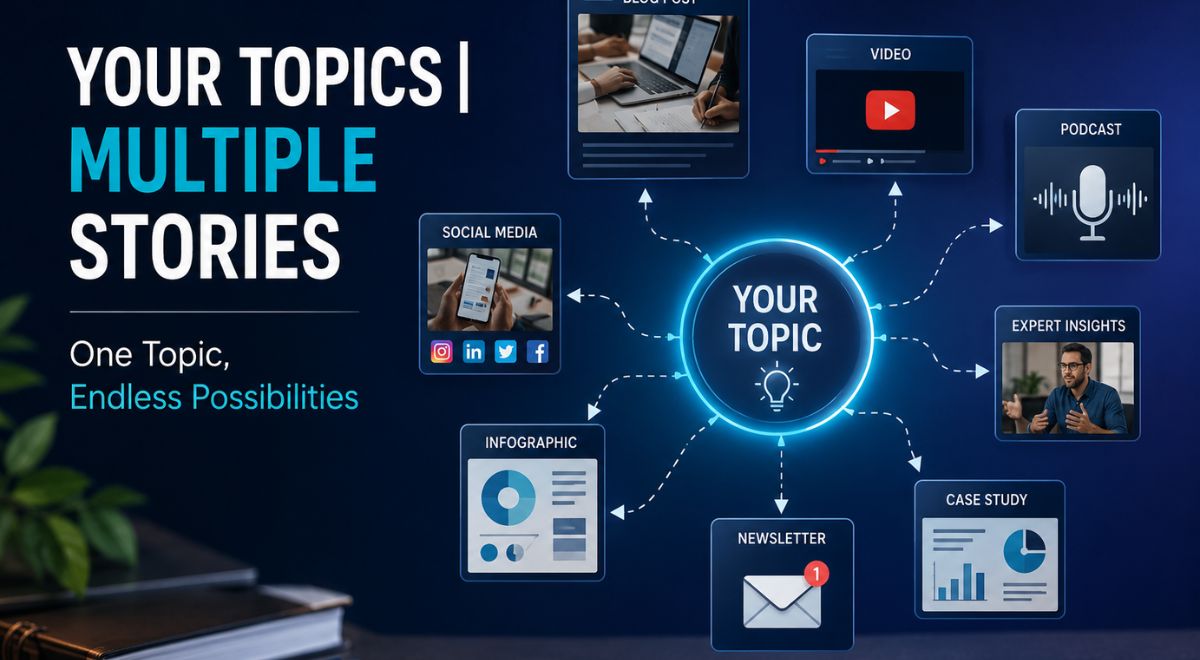
Rather than treating a topic as a single article, this approach transforms one subject into multiple narratives, perspectives, formats, and experiences. A single idea can become a blog post, case study, expert interview, customer success story, podcast episode, social media campaign, and video series.
Modern audiences consume information differently. Some prefer data-driven analysis, others connect with personal experiences, while many seek actionable advice. Multi-narrative storytelling allows creators to satisfy all these needs without abandoning their core topic.
This strategy has become increasingly important for bloggers, marketers, businesses, educators, and AI-driven content creators looking to build authority, improve SEO, and maximize audience engagement.
What Does “Your Topics | Multiple Stories” Mean?
At its core, Your Topics | Multiple Stories is a content creation framework that explores a single subject through multiple perspectives.
Instead of producing one article about a topic, creators build an ecosystem of interconnected content around the same theme.
For example, consider the topic of Artificial Intelligence:
- Story 1: The history of AI
- Story 2: How businesses use AI today
- Story 3: AI success stories
- Story 4: Ethical concerns surrounding AI
- Story 5: The future of AI
Each story focuses on the same topic but serves a different audience need.
This approach increases content depth, expands reach, and strengthens topical authority.
Why Multi-Narrative Storytelling Matters Today
Traditional content often focuses on a single angle. While informative, it may fail to address the diverse interests of modern audiences.
Today’s readers expect:
- Multiple viewpoints
- Personalized experiences
- Real-world examples
- Interactive content
- Visual storytelling
By creating multiple narratives around one topic, content becomes more engaging, relatable, and comprehensive.
This approach mirrors how people naturally understand the world—not through a single perspective but through many interconnected stories.
The Evolution of Storytelling
Storytelling has changed dramatically over time.
Traditional Storytelling
Historically, stories followed a simple structure:
- Beginning
- Middle
- End
The audience consumed information passively.
Digital Storytelling
Today, storytelling is interactive.
Readers:
- Comment on articles
- Share experiences
- Create user-generated content
- Participate in discussions
The audience becomes part of the narrative.
Must Read: How Much Does a CPA Cost for a Small Business?
AI-Powered Storytelling
Artificial intelligence now helps creators generate:
- Personalized content
- Dynamic recommendations
- Interactive experiences
- Data-driven narratives
The future of storytelling is increasingly adaptive and audience-focused.
Benefits of the Your Topics | Multiple Stories Approach
Improved SEO
Google rewards topical authority.
Instead of publishing one article, creators can build an entire content cluster around a subject.
Benefits include:
- More keyword opportunities
- Better internal linking
- Increased topical relevance
- Higher search visibility
Greater Audience Reach
Different people connect with different types of stories.
Some prefer:
- Case studies
- Tutorials
- Personal experiences
- Industry analysis
Multiple narratives help attract all audience segments.
Better Engagement
Readers spend more time exploring content ecosystems than isolated articles.
When each story naturally leads to another, engagement increases significantly.
Stronger Brand Authority
Brands that consistently explore topics from multiple angles become trusted sources of information.
Authority leads to:
- More traffic
- Better rankings
- Increased conversions
- Greater audience loyalty
How Content Creators Use Multiple Stories
Bloggers
Bloggers can transform one topic into:
- Guides
- Opinion pieces
- Tutorials
- Reviews
- Success stories
Businesses
Companies can create:
- Customer case studies
- Product tutorials
- Industry insights
- Behind-the-scenes stories
Educators
Educational content can include:
- Historical perspectives
- Expert interviews
- Research summaries
- Practical applications
Media Organizations
News platforms often cover the same topic through:
- Breaking news
- Analysis
- Interviews
- Investigations
- Editorial opinions
Real-World Example: One Topic, Five Stories
Let’s use “Remote Work” as an example.
Story 1: The Employee Perspective
How remote work improves work-life balance.
Story 2: The Employer Perspective
Managing distributed teams effectively.
Story 3: The Technology Perspective
Tools that power remote collaboration.
Story 4: The Economic Perspective
How remote work affects local economies.
Story 5: The Future Perspective
Predictions for the future workplace.
One topic creates five valuable pieces of content.
Using AI for Multi-Narrative Content Creation
Artificial intelligence has accelerated content production.
AI can help creators:
- Identify new angles
- Generate outlines
- Analyze audience behavior
- Repurpose content
- Discover content gaps
However, human creativity remains essential for producing authentic and meaningful narratives.
The best results come from combining AI efficiency with human insight.
Common Mistakes to Avoid
Repeating the Same Information
Each story should provide unique value.
Ignoring Audience Segments
Different audiences require different messaging.
Weak Internal Linking
Stories should connect naturally.
Lack of Consistency
All narratives should support the overall topic.
The Future of Your Topics | Multiple Stories
The future of content creation will be increasingly personalized.
Emerging technologies such as:
- Artificial Intelligence
- Augmented Reality
- Virtual Reality
- Interactive Media
will enable creators to build richer and more immersive storytelling experiences.
Instead of reading a single article, audiences will explore complete narrative ecosystems tailored to their interests.
Conclusion
The Your Topics | Multiple Stories strategy is more than a content trend. It represents the future of digital storytelling.
By transforming one idea into multiple narratives, creators can improve SEO, increase engagement, reach wider audiences, and establish stronger authority within their niche.
Whether you’re a blogger, marketer, business owner, educator, or content strategist, adopting a multi-narrative approach can help you create deeper, more meaningful content that resonates with modern audiences.
In a world overflowing with information, the brands and creators who tell the most complete stories will be the ones that stand out.